May 22, 2026
The Armor of God Explained (Ephesians 6), Piece by Piece
Paul tells the believer not to hide from the battle but to get dressed for it. Here is the full Armor of God from Ephesians 6 — each piece, what it protects, and how to put it on daily. By Celestino.
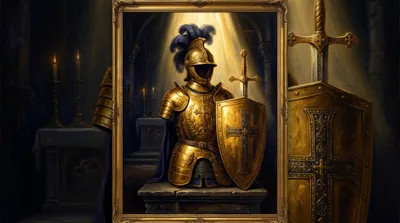
Most people, when they feel spiritually under attack, do one of two things: they panic, or they pretend nothing is happening. Paul tells the believer to do neither. In Ephesians 6 he says something far more practical and far braver. He says: get dressed.
“Put on the whole armour of God, that ye may be able to stand against the wiles of the devil” (Ephesians 6:11). Not flee. Not deny. Stand. Let me walk you through the armor he describes, piece by piece, the way my grandmother walked me through it — because protection, in Scripture, is something you put on, not something you wait for.
First, the battle is named
“For we wrestle not against flesh and blood, but against principalities, against powers, against the rulers of the darkness of this world, against spiritual wickedness in high places” (Ephesians 6:12).
Before the armor, the honesty: the struggle is real, and it is not mainly with the people who frustrate you. The person who wronged you is not your true enemy. There is an older darkness behind the human faces — and in families, I see it walk as a generational chain, the same wound passed down until someone finally sees it. The armor is for that fight.
The six pieces, and what each one protects
- The belt of truth (v. 14). Everything else hangs on this. A lie loosens the whole outfit. Truth — about yourself, your bloodline, your need for God — is what holds the rest together.
- The breastplate of righteousness (v. 14). The breastplate guards the heart. Not your own righteousness for boasting, but the righteousness Christ gives, standing guard over the place the enemy most wants to reach.
- Feet shod with the gospel of peace (v. 15). You cannot stand on slippery ground. Peace with God is the footing that lets you hold your place when you are pushed.
- The shield of faith (v. 16) — “wherewith ye shall be able to quench all the fiery darts of the wicked.” The shield is the one piece you move. Faith is active: you raise it against each specific accusation, each fear, each “you’ll never break free.”
- The helmet of salvation (v. 17). The helmet guards the mind — the thoughts, the despair, the lies told in your own voice at three in the morning. Salvation, remembered, is what protects the head.
- The sword of the Spirit, which is the word of God (v. 17). The only offensive piece. And notice: it is Scripture spoken. It is exactly how Christ fought in the wilderness — “It is written.” This is why I teach souls to pray Psalm 91 and the Word back into the dark.
And the piece that holds it all: prayer
Right after the sword, Paul adds what is easy to miss: “Praying always with all prayer and supplication in the Spirit” (v. 18). The armor is worn in an atmosphere of prayer. Without that, it is just a costume. With it, it is protection. This is the heart of every prayer of protection I write.
How to put it on each morning
My grandmother put on her crucifix every morning before her feet were fully on the floor. You can put on the armor the same way — not as a ritual that works by itself, but as a deliberate naming of what God has already given:
- Name each piece aloud. Lord, today I put on truth, righteousness, peace, faith, salvation, and Your Word.
- Raise the shield against the specific dart. Whatever the day’s fear is, lift faith against that exact thing.
- Keep the sword sharp. Carry one verse for the day — Psalm 91:11, Galatians 3:13 — and speak it when you are pressed.
- Stay in the atmosphere of prayer. A reminder helps; many keep a Seal of Saint Michael close, the way a soldier keeps his kit — not a charm, a reminder of the fight and the One who wins it.
“The chain ends here.”
If you have put on the armor faithfully and one fight keeps coming back the same way, generation after generation in your family, that is the sign of something inherited that has not yet been named. Naming it is the work I do at the Three-Gate Reading — so you know exactly what you are standing against.
Stand, then. You were never told to run.